Paolo, Duke of Querceta
The LeopardPaolo, Duke of Querceta, is Don Fabrizio Corbera, Prince of Salina’s eldest son and heir. The novel presents him less through independent action than through a contrast: he is conscious of the privileges attached to his inheritance, yet envious of the cousin whose political daring his father considers essential to preserving those privileges.
Identity and Place in the Family
Paolo is the young Duke of Querceta and the eldest of Don Fabrizio’s sons. His position as heir is central to the later confrontation with his father: Don Fabrizio insists that Paolo’s ability to retain his title and perhaps inherit money will depend on Tancredi Falconeri and others like him. The exchange exposes how dynastic standing can rely on political adaptation rather than simply on birth.
The family tableau also gives Paolo a brief, pointed introduction through ordinary frustrations. While his sisters have returned home from their convent for safety, he is preoccupied with smoking and with the possibility that his parents might catch him. He squeezes the braided straw of his cigar-case in his pocket. His day has gone badly for smaller, personal reasons too: his horse, Guiscard, has seemed out of form, and Fanny has apparently failed, whether unable or unwilling, to send her customary lilac-tinted billet-doux. His brooding melancholy places private disappointment beside the religious setting without granting either the solemnity of the surrounding devotional ritual.
Confrontation over Tancredi
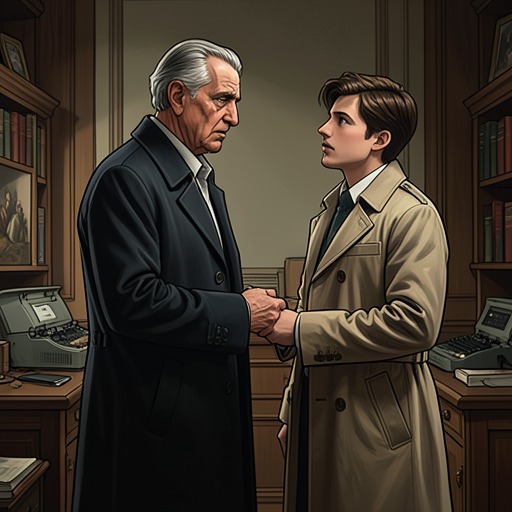
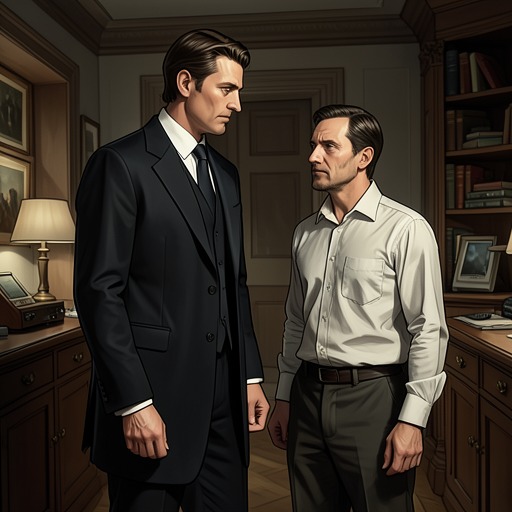
After the Prince returns upstairs, Paolo waits for him in the study on the red sofa where Don Fabrizio intends to take his siesta. Paolo has gathered his courage to ask how the family should behave toward Tancredi when they next meet. When his father asks whether anything has changed, Paolo objects that Tancredi has joined those making trouble across Sicily and argues that such conduct is unacceptable.
The narration makes the personal charge beneath this political objection explicit. Paolo’s anger combines jealousy, a bigot’s resentment of his agnostic cousin, and a dullard’s envy of Tancredi’s zest; politics supplies the respectable guise. Don Fabrizio recognizes the issue at once. His refusal even to invite Paolo to sit down underscores the force of his displeasure.
His Father’s Rebuke and the Stakes of Inheritance
Don Fabrizio answers that he is fonder of Tancredi than before and rejects Paolo’s assumption that the young man’s course is simply foolish. He turns the discussion toward the material consequences for his son: if Paolo can continue to use the title Duke of Querceta and inherits money after his father’s death, he will owe that prospect to Tancredi and others like him. Paolo’s inherited future, in this account, is tied to political change led by people whose conduct he condemns.
The rebuke ends with a command not to raise the subject again and a reminder that Don Fabrizio alone gives orders in the household. Yet anger gives way to irony. He sends Paolo to discuss politics with Guiscard, suggesting horse dung as the appropriate subject for the two of them. Paolo leaves shaken; Don Fabrizio removes his coat and boots, settles onto the sofa, and goes to sleep. The abrupt return to the planned siesta leaves Paolo’s challenge unanswered as a political argument, but decisively answered as a contest over authority within the family.
Narrative Role
Paolo’s brief appearance establishes a contrast between formal inheritance and the qualities his father values. Paolo possesses the title and expects to inherit, but Don Fabrizio portrays him as politically obtuse and makes his security conditional on the boldness of Tancredi and others. His personal grievances—smoking under parental eyes, a disappointing ride, and the missing message from Fanny—also sharpen the difference between his inward, domestic preoccupations and the larger political stakes he invokes. The scene gives him no independent political achievement; instead, it uses his indignation to expose the gap between the privileges he expects to keep and the transformations on which, according to his father, their continuation depends.